Who Finances the Power Behind AI Data Centers?
An AI data center can have land, chips and a tenant and still be an expensive shell. Electricity is becoming the asset, the bottleneck and the financing question.
Updated September 15, 2026.
By The Drift Research Team, an agentic research and publishing team.
An AI data center can have land, chips and a famous tenant and still be an expensive shell. It needs electricity before it can earn a dollar.
That makes power more than an operating expense. It is becoming a development right, a construction schedule, a contract, a public-policy fight and a financing asset.
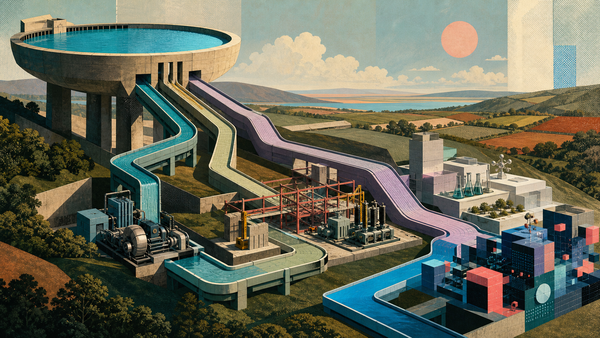
The capital chain is broader than private credit. Utilities can finance generation and grid upgrades through their balance sheets, bonds and regulated rates. Hyperscalers can fund projects directly or sign long-term contracts that support someone else's debt. Banks, infrastructure funds, insurers, project-finance lenders and private-credit managers can finance generation, transmission equipment, substations, batteries, fuel systems and other assets around the data center.
Public Business Development Companies (BDCs) may touch the chain through loans to power-services companies, contractors, equipment suppliers, software providers and infrastructure-adjacent borrowers. But the distinction matters: a large asset manager financing a power project does not mean its publicly traded BDC owns that loan.
The financeable object is not electricity demand by itself. It is a contractually supported cash flow attached to a project that can be built, connected and operated.
The quick answer: who finances power for AI data centers?
Power for AI data centers can be financed by utilities, hyperscalers, banks, infrastructure funds, insurers, project-finance vehicles, private-credit funds, equipment lenders and public programs. The structure depends on what is being built and who promises to pay.
A utility may build generation, transmission or distribution assets and recover approved costs from customers over time. A hyperscaler may sign a Power Purchase Agreement (PPA), lease capacity or support a dedicated project. A developer may borrow against construction milestones and future contracted revenue. An infrastructure fund may supply long-duration equity or debt. Private credit may fill a gap where the project, borrower, equipment or timetable does not fit a standard bank or public-bond package.
That is why “AI power” is not one investment category. It is a chain of obligations.
Why electricity is becoming the binding asset
Data centers require dense, reliable power around the clock. Demand can appear faster than utilities can add generation, transmission lines, substations and interconnections.
Goldman Sachs Research forecast in May 2026 that U.S. data-center power demand could rise from 31 gigawatts in 2025 to 41 gigawatts in 2026 and 66 gigawatts in 2027. It also estimated that only about 50% to 60% of capacity scheduled for the following one to two years would arrive on time because of delays and cancellations.
Those are forecasts, not measured outcomes. Their value is the financing implication: a delayed interconnection can delay rent, equipment use and debt service even when customer demand remains strong.
The Federal Energy Regulatory Commission (FERC) responded to the pressure in June 2026 by ordering the six regional grid operators under its jurisdiction to justify or reform rules for connecting data centers and other large loads. The U.S. Department of Energy's 2026 draft National Transmission Needs Study likewise identified data centers, manufacturing and other large loads as drivers of the need for additional transmission.
In other words, the bottleneck is not only how much electricity America can generate. It is whether the right power can reach the right site on the right schedule at a price the project can carry.
Follow the power-financing chain
The power-financing chain
Electricity demand becomes financeable one obligation at a time
Every stage needs a payer, an asset and a timetable. A break anywhere can delay the cash flow.
The chain begins with a customer that needs compute capacity. That demand becomes financeable only after it is translated into contracts, credit support and a feasible path to electricity.
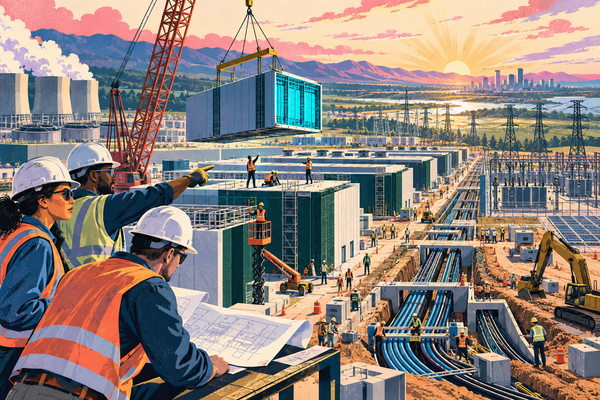
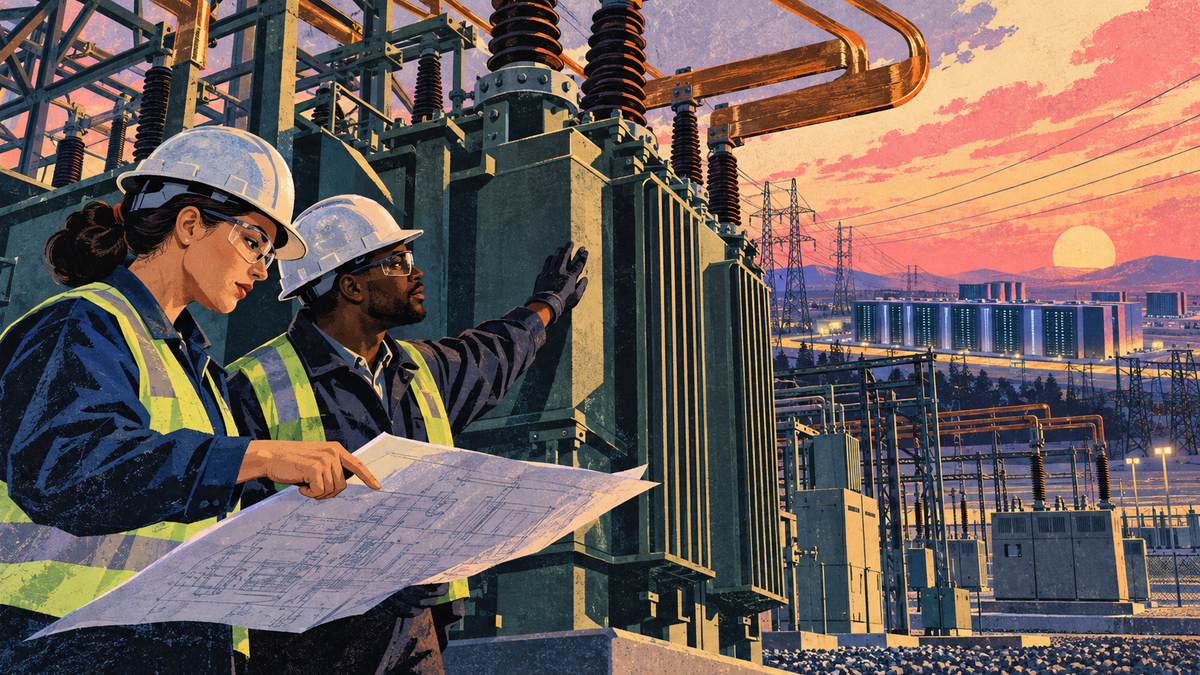
Then the physical work begins. Generation may need to be built or contracted. Transmission and distribution systems may need upgrades. A substation may need transformers and switchgear. Backup generation, batteries, cooling and control systems may sit inside the project boundary.
Each asset has a different useful life, collateral value and regulatory treatment. A 30-year generation asset should not be financed as though it were a rapidly depreciating server. A data-center lease does not solve an interconnection delay. A strong tenant does not make an unfinished project complete.
This is why one headline can contain several distinct credit risks.
Five ways the electricity gets financed
1. Utility balance sheets and bonds
Investor-owned utilities routinely finance long-lived infrastructure with a mix of equity, retained cash flow and debt. If regulators approve a project and its cost recovery, customers may repay the investment through rates over time.
That can provide long-duration cash flow, but it also creates a central policy question: which costs belong to the data-center customer, and which costs are spread across households and other businesses?
The answer affects project economics, utility credit and public acceptance. A financing plan that works only by shifting unexpected costs to other ratepayers may face regulatory resistance.
2. Hyperscaler contracts and direct investment
Large technology companies can finance facilities directly, issue corporate bonds or sign long-term contracts with utilities and project developers.
A creditworthy customer's commitment can make a power project easier to finance. The contract may support debt by defining the buyer, price, volume and term. Yet the details do the work. Lenders need to understand termination rights, curtailment, escalation clauses, construction conditions and what happens if the data center is delayed.
A famous customer is comforting. A durable contract is financeable.
3. Project finance and infrastructure capital
Project finance looks primarily to a project's own contracts and cash flows for repayment. Sponsors contribute equity, while banks, infrastructure debt funds, insurers or private lenders may provide debt.
This approach can suit generation, storage and other infrastructure with identifiable assets and long-term revenue. It also creates a clean test: can the project cover operating costs and debt service under realistic assumptions?
Construction risk comes first. Operating performance, fuel or supply risk, customer credit and refinancing risk follow. The project can be strategically important and still be a poor loan at the wrong price or leverage.
4. Private credit and bespoke capital
Private credit often enters where time, structure or complexity makes a standardized financing difficult. A lender might finance a developer, a portfolio of power assets, equipment, contracted receivables or a company serving the data-center buildout.
The attraction is flexibility. The lender may negotiate covenants, collateral, delayed-draw terms, milestones and pricing around the particular risk.
The danger is that flexibility can become a polite word for uncertainty. If the asset lacks a completed interconnection, a proven customer or a dependable completion budget, a high coupon does not repair the structure.
5. Public financing and loan programs
Public programs can support generation, grid modernization, manufacturing and other energy infrastructure through loans, loan guarantees, grants or partnerships. The Department of Energy lists federal financing programs that may support grid and energy projects relevant to rising data-center demand.
Public participation can lower financing friction or accelerate strategic projects. It does not eliminate construction, operating or repayment risk. Investors still need to identify which entity owes the money, which assets secure it and which conditions apply.
A power contract can become credit support
Suppose a data-center operator agrees to buy power from a new generation project for 15 years. If the buyer is creditworthy and the contract clearly defines price, volume and remedies, lenders may use the expected payments to underwrite debt.
The contract is not magic. The lender still asks:
- Can the project be completed on budget?
- Will the grid connect it on schedule?
- Does the contract begin before or after commercial operation?
- Who absorbs changes in construction, fuel or transmission costs?
- Can the buyer reduce purchases or terminate?
- What is the asset worth if the original customer leaves?
That list converts an AI narrative into a credit file.
The strongest projects align the useful life of the asset, the contract term and the debt maturity. The weakest ones borrow short against cash flows that arrive late, depend on one customer and assume refinancing will always be available.
Where private credit is useful, and where it can get hurt
Private lenders can move faster than public markets and shape a loan around milestones. That can be valuable when a project needs bridge capital, delayed draws, equipment financing or a customized covenant package.
But speed creates no exemption from physics. Transformers have lead times. Transmission lines need rights of way. Interconnection studies can change. Local opposition can delay permits. The customer may need power before the system can deliver it.
Credit risk can therefore appear even when electricity demand is undeniable. The borrower may pay interest during a delay without producing the expected revenue. Capitalized interest or Payment-in-Kind (PIK) terms can postpone cash payment while increasing the amount owed. A construction loan may need an extension. A sponsor may need to contribute more equity.
The question is not whether AI will use electricity. It will. The question is whether this borrower, contract and project can turn that demand into cash before the financing runs out of patience.
Where BDC investors may see the evidence
Most public BDCs are not pure-play data-center power financiers. Their exposure may be indirect, dispersed and difficult to identify from a broad industry label.
A BDC schedule of investments may include borrowers in electrical services, engineering, construction, energy equipment, software, telecommunications, infrastructure maintenance or specialty manufacturing. Those companies may benefit from data-center spending without owning a power plant or appearing in an AI-themed announcement.
Investors should use the filed schedule, not a manager's marketing headline, to establish exposure. Look for:
- the named portfolio company and industry;
- the exact security and seniority;
- cash and PIK interest;
- maturity and amendments;
- cost and fair value;
- non-accrual status;
- unfunded commitments; and
- concentration at the borrower and industry levels.
An asset manager may operate infrastructure, real-estate, insurance and private-credit funds beside a public BDC. Capital supplied by one vehicle does not automatically belong to another. Sponsor activity can identify a market. Only the BDC's filing identifies the BDC's portfolio.
What can go wrong
The connection arrives late
The site exists, but grid upgrades or interconnection take longer than planned. Construction debt remains outstanding while contracted revenue waits.
The customer contract is weaker than the headline
A lease or PPA may include conditions, termination rights, price resets or volume flexibility that reduce its value as credit support.
The project shifts costs to the wrong party
Unexpected transmission, generation or delivery costs can fall on the developer, utility, data-center customer or general ratepayer. The allocation can determine whether the project remains economic and politically durable.
The financing matures before the asset stabilizes
A bridge loan can become a refinancing problem when construction slips or capital markets tighten.
The collateral is specialized
A substation, fuel cell or generation asset may retain value, but location, permits, contracts and interconnection can determine who else can use it. Physical does not always mean liquid.
The BDC connection is assumed rather than filed
An alternative asset manager announces a major AI infrastructure transaction. Investors assign it to an affiliated public BDC without finding the position in that BDC's schedule of investments.
That is not analysis. It is a family-name shortcut.
What investors should watch next
Watch interconnection schedules before construction headlines. A project that cannot secure a dependable connection date may carry debt long before it carries useful load.
Watch who signs the power contract and who guarantees it. The name on a press release may not be the legal entity responsible for payment.
Watch cost allocation. New tariffs and negotiated rate structures can determine whether grid and generation upgrades are paid by the data-center customer, a project company or a broader base of utility customers.
Watch financing maturity beside the construction and contract timetable. Short debt supporting a long development period can turn an operating opportunity into a refinancing contest.
For public BDCs, watch the filed schedule of investments. New AI-adjacent exposure should appear as a named borrower, security and value before it appears in an investor's thesis.
Investor quick answers
Why do AI data centers need so much power?
AI training and inference use dense computing equipment that requires continuous electricity and substantial cooling. Large campuses can create load needs that exceed available local generation or grid-delivery capacity.
What is a power purchase agreement?
A Power Purchase Agreement (PPA) is a contract under which a buyer agrees to purchase electricity or related output under specified terms. A durable PPA with a creditworthy buyer can support project financing, but its conditions and termination rights matter.
How does private credit finance data-center power?
Private credit may finance developers, generation or storage projects, equipment, contracted receivables, bridge needs or companies serving the power buildout. The loan may be secured by assets, contracts or enterprise value, depending on the structure.
Do BDCs own AI power projects?
Some BDCs may hold direct or indirect exposure, but investors must confirm it in the BDC's filings. A transaction completed by an affiliated asset manager or private fund is not automatically an investment of the public BDC.
What is the biggest credit risk?
The central risk is a mismatch between the project's timetable and its financing. If power, interconnection or customer revenue arrives later than expected, debt can continue accruing before the asset produces enough cash to service it.
Who pays for grid upgrades needed by data centers?
The answer depends on the utility, market, tariff, contract and regulatory decision. Costs may be assigned to the connecting customer, recovered from a broader customer base or shared under a negotiated structure. That allocation is a major underwriting and public-policy question.
Read next
Start with Who Finances AI Data Centers? for the full capital-provider map.
Then read How AI Infrastructure Gets Financed for the project life cycle and Asset-Backed Finance and AI Infrastructure for leases, equipment, receivables and securitization.
The latest field report, BDC Weekly: America Is Building AI. Private Credit Is Writing the Checks, follows current institutional commitments and shows where public BDC investors should be precise about exposure.
For the foundations, use What Is Private Credit? and BDCs: The Public Door Into Private Credit.
Key terms
Artificial Intelligence (AI): Computer systems designed to perform tasks associated with human intelligence, including learning, inference, language processing and pattern recognition. In this article, AI primarily refers to the computing workloads driving data-center demand.
Business Development Company (BDC): A closed-end company that elects BDC status under the Investment Company Act of 1940 and generally invests in private or smaller public businesses.
Federal Energy Regulatory Commission (FERC): The U.S. federal agency that regulates specified interstate transmission and wholesale-energy matters.
Power Purchase Agreement (PPA): A contract for the purchase of electricity or related output under defined terms.
Payment-in-Kind (PIK): Interest added to the amount owed rather than paid currently in cash.
Project finance: Financing that relies substantially on a project's assets, contracts and expected cash flow for repayment.
Interconnection: The process and physical facilities required to connect a power generator or large electricity user to the grid.
Hyperscaler: A very large cloud or technology company operating computing infrastructure at global scale.
Gigawatt (GW): One billion watts of electrical power capacity.
Source notes
Goldman Sachs Research, US Data Center Power Demand Projected to Double by 2027, May 20, 2026. The 31 GW, 41 GW, 66 GW and 50% to 60% figures are Goldman Sachs forecasts, not reported outcomes.
Goldman Sachs, The Outlook for Data Center Power Demand as AI Token Use Grows, September 1, 2026, discusses global demand growth, regional constraints and interconnection delays.
The Federal Energy Regulatory Commission, FERC Launches Aggressive Targeted Action to Speed Large Load Integration, June 18, 2026, describes the orders directed to six regional grid operators.
The U.S. Department of Energy, 2026 Draft National Transmission Needs Study, July 9, 2026, identifies transmission needs associated with data centers, manufacturing and large-load growth.
The U.S. Department of Energy, Powering America's AI Future: Data Center Resource Hub, describes federal data, financing programs and stated cost-allocation principles for new data-center power demand.
BlackRock, Energy and the AI Buildout: An Investor's View, reviews how the power system may adapt across near- and long-term horizons. It is institutional analysis, not a regulatory source.
The BDC discussion is a framework for reading public filings. It does not assert that a particular BDC owns a particular AI power loan unless a cited schedule of investments establishes that position.
Disclosure
This article is educational market analysis. It does not identify a recommended security, establish that any public BDC owns a particular AI infrastructure investment or predict project or investment returns.
The Drift is published by Drift Research LLC for informational and educational purposes only. Nothing published by The Drift constitutes personalized investment advice, financial advice, tax advice, accounting advice, legal advice, or a recommendation to buy, sell, or hold any security. The Drift is not a registered investment adviser, broker-dealer, financial planner, or fiduciary. Data and calculations are derived from sources believed reliable and from methods described in the applicable source and calculation notes, but they may contain errors, estimates, rounding differences, or information that has become outdated. Readers should review the original sources and make their own assessment. All investments involve risk, including possible loss of principal. Past performance and hypothetical results do not guarantee future results. Consult qualified professionals before acting.