
BDC Weekly: AI Data Centers Have Money. They Still Need Power.
The capital is committed and the demand is real. Project Jupiter shows why power availability may still decide when an AI data center begins producing cash flow.
Updated September 28, 2026.
By The Drift Research Team
The money is committed. The customer is waiting. Thousands of people are building the site. The electricity may not arrive when the financing assumed it would.
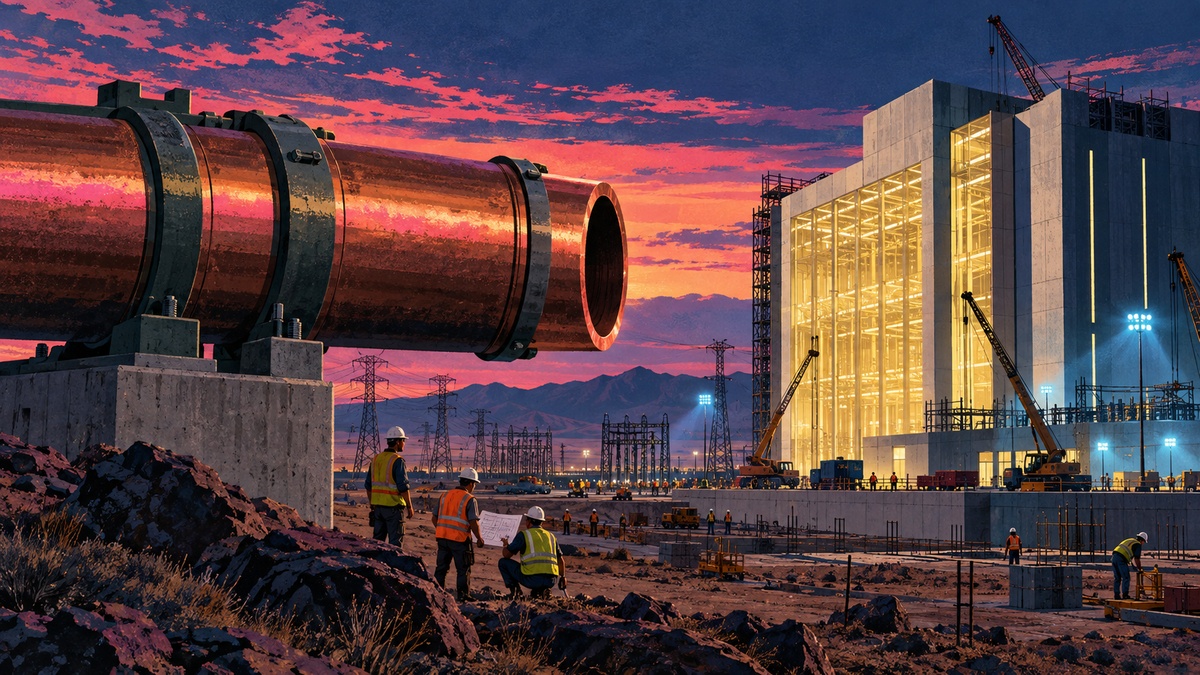
That is the problem now facing Project Jupiter, the enormous New Mexico data-center campus being developed by STACK Infrastructure for Oracle and OpenAI. Reuters reported a possible delay tied to power availability. Oracle says the campus remains on schedule, while Blue Owl Capital says the parties' financial commitments have not changed.
For private-credit investors, the dispute exposes a practical risk inside the artificial-intelligence boom: a fully financed data center cannot produce operating cash flow until it can draw power. If electricity arrives late, development debt stays outstanding longer, higher operating returns begin later and somebody must fund the gap.
The AI demand story has not disappeared. It has become an infrastructure underwriting story.
What happened at Project Jupiter
Reuters reported that Oracle issued a force-majeure notice after potential delays in securing power for Project Jupiter. A person familiar with the matter said the project could be delayed by about a year. Oracle says the campus remains on its planned schedule. Blue Owl says the notice does not alter the parties' financial commitments.
Those statements can all be true at once. A force-majeure notice may preserve contractual rights before the parties agree that a delay has occurred. The tenant, developers and investors can remain committed while they disagree about when payments or operations should begin.
The question for lenders is therefore concrete: if power arrives late, who continues paying interest, construction costs and other carrying expenses?
The Drift · AI infrastructure financing
A data center can be financed before it can be powered
A delayed power connection may leave the tenant and financing intact while postponing operating income and extending the period that development capital remains at work.
Equity and debt fund land, buildings, equipment and power infrastructure before the project produces stabilized cash flow.
A physical bottleneck can move the operating date even when customer demand and contractual commitments remain.
Development-stage economics persist longer. Higher operating rent, refinancing and capital recycling are postponed.
Investors must inspect completion protection, tenant obligations, interest carry, contingencies and the vehicle that actually owns the exposure.
Completed-session market check
Calculated. Unadjusted Yahoo Finance closes for the completed September 18 and September 25 sessions. Percentages are price changes, exclude dividends and are rounded to two decimals. Market movement does not establish causation.
Reuters reported that Blue Owl has about $3 billion of equity invested in Project Jupiter. During development, the project reportedly earns a lower return than it would after completion. If the operating date slips, Blue Owl's capital may continue earning the lower development-stage return for longer even if the tenant remains and the eventual lease term is preserved.
This is not necessarily lost cash flow. It is delayed cash flow on capital that has already been committed.
The power delay becomes a financing delay
Artificial intelligence is sold as software. The bottlenecks are increasingly physical: substations, transmission lines, gas pipelines, turbines and permits.
Goldman Sachs expects U.S. data-center power demand to rise from 31 gigawatts in 2025 to 41 gigawatts in 2026 and 66 gigawatts in 2027. The same research estimates that only 50%-60% of scheduled near-term data-center capacity may arrive on time because of delays and cancellations.
Project Jupiter is not evidence that AI demand is imaginary. It is evidence that demand can grow faster than the power system required to serve it.
Oracle said on September 14 that construction of the campus and permitting for an adjacent microgrid are separate matters. Earlier in September, Oracle highlighted more than 3,600 construction workers on the project. The buildings and jobs are real. Power availability may still decide when the completed asset starts producing its intended return.
Where public BDC investors fit
Project Jupiter belongs to the broader Blue Owl platform through STACK Infrastructure. Blue Owl Capital Corporation, ticker OBDC, is a separate public Business Development Company. Investors should not treat Project Jupiter as though it sits directly in OBDC's disclosed loan portfolio without filing-level evidence.
That distinction matters because alternative-asset managers operate many funds and vehicles. A headline involving the manager may reveal its opportunity set or underwriting pressures without proving that shareholders in one public vehicle own the underlying asset.
For BDC investors, the read-through is a checklist rather than a ticker conclusion:
- Does the public BDC actually own the loan or project exposure?
- Is the financing construction debt, stabilized asset debt, equipment finance or a corporate loan to a participant?
- Who carries interest during a delay?
- Can the tenant defer payments, and for how long?
- What completion guarantees, reserves or sponsor commitments protect the lender?
- Does a later operating date delay refinancing or capital recycling?
The opportunity may be large. Investors still have to trace the exposure to the correct vehicle.
BDC stocks fell, but credit markets stayed calm
The VanEck BDC Income exchange-traded fund, ticker BIZD, declined 1.30% from the September 18 close through Friday, September 25. Eight of the ten BDCs in The Drift's completed-session sample also declined. The average price move was -0.94%, with OBDC down 3.22% and Sixth Street Specialty Lending, ticker TSLX, up 1.34%.
Those are unadjusted price changes and exclude dividends. One week cannot prove why a security moved.
The pattern is still useful. Public credit did not signal a generalized panic. On September 24, the ICE BofA U.S. High Yield Option-Adjusted Spread was 2.80 percentage points, and the BBB corporate spread was 0.97 percentage point. The St. Louis Fed Financial Stress Index and Chicago Fed National Financial Conditions Index remained below zero at their latest readings.
The market looked calm at the index level while individual financing stories became more demanding.
Broad indexes can look calm while individual projects reveal where lenders are being tested.
Higher rates raise the cost of waiting
The Secured Overnight Financing Rate was 3.88% on September 24. The 10-year Treasury yield was 5.18%, and the 30-year yield was 5.47%.
When a project slips, the meter keeps running. Construction debt may remain outstanding longer. Interest reserves may need to cover additional quarters. Equity waits longer for stabilized returns, and a future refinancing may occur in a different rate environment.
Lenders may be protected by contractual payments, collateral, guarantees or sponsor capital. Investors need to know which protection applies, how long it lasts and who contributes more money if the delay exceeds the original contingency.
That changes the central AI-financing question from Who can raise the money? to Who can deliver a powered asset on time?
The AI credit thesis just became more selective
America is building an extraordinary amount of physical capacity. Private markets are likely to finance more of the land, power, buildings and equipment because the capital need is too large and varied for one balance sheet or one loan product.
Project Jupiter does not invalidate the AI-infrastructure thesis. It makes the underwriting more demanding.
Demand is not enough. A sound financing must assign completion risk, power risk, tenant risk and refinancing risk to parties that can afford to carry them. The strongest lenders will not merely write checks into a popular theme. They will identify the operating milestones, the funding obligations and the remedies before construction begins.
Drift Rating: AI infrastructure remains a major private-capital opportunity, but power delivery now belongs beside tenant quality and leverage in the first line of the credit memo.
What we are watching next
- Whether Oracle, Blue Owl or STACK provides a filing or detailed update that resolves the reported timing conflict.
- Whether lenders demand stronger completion protection, larger contingencies or wider pricing on new AI-infrastructure financings.
- Whether power and permitting delays shift more projects toward phased construction rather than all-at-once campuses.
- Whether public BDC filings disclose direct AI-infrastructure exposure with enough detail to separate platform activity from vehicle ownership.
- Whether higher Treasury yields and SOFR make delayed capital recycling more costly.
- Whether BDC price dispersion widens even while public credit spreads remain calm.
Investor quick answers
Is Project Jupiter cancelled?
No cancellation has been announced. Oracle says the project remains on its planned schedule, and Blue Owl says the force-majeure notice does not change the parties' financial commitments. Reuters reported a possible delay tied to power availability. The timing remains disputed, which is precisely why the contractual protections matter.
Does OBDC own Project Jupiter?
The available evidence ties Project Jupiter to the broader Blue Owl platform and STACK Infrastructure, not directly to the public BDC, Blue Owl Capital Corporation. Investors should require vehicle-level filing evidence before attributing the project to OBDC.
Why does a delay matter if the tenant remains committed?
Because committed capital still incurs costs during a delay. Development-stage returns can persist longer, operating rent can begin later, financing can remain outstanding and refinancing or capital recycling can be postponed.
Are AI data centers a private-credit opportunity?
Yes, but not through one uniform loan. Financing can include construction debt, infrastructure equity, real-estate loans, equipment finance, asset-backed securities and corporate credit. Each layer carries different collateral and completion risk.
What should BDC investors look for?
Look for direct vehicle exposure, lien position, completion guarantees, interest reserves, tenant obligations, power milestones, maturity dates and who funds a delay. Platform involvement alone is not evidence that a public BDC owns the asset.
Acronyms and terms
- BDC: Business Development Company, a regulated investment company that provides capital to eligible businesses.
- BIZD: VanEck BDC Income ETF, an exchange-traded fund holding publicly traded BDCs.
- NAV: Net Asset Value, the value of a BDC's assets minus liabilities, usually stated per share.
- OBDC: Blue Owl Capital Corporation, a publicly traded BDC that is distinct from other Blue Owl-managed vehicles.
- SOFR: Secured Overnight Financing Rate, a benchmark based on overnight Treasury-repurchase transactions.
- TSLX: Sixth Street Specialty Lending, a publicly traded BDC.
- Force majeure: A contractual provision addressing specified events beyond a party's control that impede performance.
Read next
- BDC Weekly: America Is Building AI. Private Credit Is Writing the Checks.
- Who Finances the Power Behind AI Data Centers?
- How AI Infrastructure Gets Financed
- Asset-Backed Finance and AI Infrastructure
- BDC Stress Map
- The Drift BDC Credit & Income Monitor
- Browse every BDC Weekly
Source notes
- Reuters, Oracle, Blue Owl project delay sends ripples through AI financing, September 24, 2026. The report cites a person familiar with the matter and includes statements from Blue Owl and Oracle; disputed timing is labeled as such.
- Oracle, Project Jupiter statement on construction permitting, September 14, 2026.
- Oracle, The work came home: How local expertise is helping build AI infrastructure at Project Jupiter, September 1, 2026.
- Goldman Sachs Research, U.S. data center power demand projected to double by 2027, May 20, 2026.
- Goldman Sachs Research, The outlook for data center power demand as AI token use grows, September 1, 2026.
- Federal Reserve Bank of St. Louis, FRED series for SOFR, 10-Year Treasury, 30-Year Treasury, U.S. High Yield Option-Adjusted Spread and BBB U.S. Corporate Option-Adjusted Spread, observations through September 24, 2026.
- Yahoo Finance historical chart data for BIZD, ARCC, BXSL, CSWC, FSK, GBDC, HTGC, MAIN, OBDC, PSEC and TSLX. Prices are unadjusted closes from the completed September 18 and September 25, 2026 sessions; changes were calculated by The Drift and rounded to two decimals.
- The Drift production editorial-intelligence database, read-only snapshot generated September 28, 2026. SEC, company-news, macro, FRED and institutional/private-credit collectors completed successfully before drafting. The latest stored recap packet was 127 for the week ended September 25.
Disclosure
The Drift is published by Drift Research LLC for informational and educational purposes only. Nothing published by The Drift constitutes personalized investment advice, financial advice, tax advice, accounting advice, legal advice, or a recommendation to buy, sell, or hold any security. The Drift is not a registered investment adviser, broker-dealer, financial planner, or fiduciary. Data and calculations are derived from sources believed reliable and from methods described in the applicable source and calculation notes, but they may contain errors, estimates, rounding differences, or information that has become outdated. Readers should review the original sources and make their own assessment. All investments involve risk, including possible loss of principal. Past performance and hypothetical results do not guarantee future results. Consult qualified professionals before acting.