
BDC Weekly
BDC Weekly: Hercules Raises $400 Million as BDC Stocks Slide
Lenders can still raise money. Their shareholders have a harder question: how much of the income survives borrowing costs, expenses and credit losses?

BDC Weekly
Lenders can still raise money. Their shareholders have a harder question: how much of the income survives borrowing costs, expenses and credit losses?
BDC Weekly
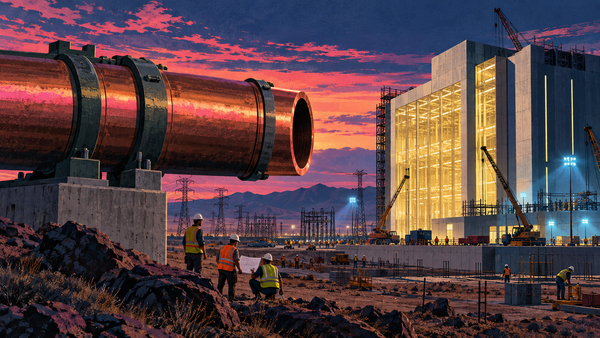
The capital is committed and the demand is real. Project Jupiter shows why power availability may still decide when an AI data center begins producing cash flow.

Private Credit
K-FIT offers periodic liquidity around private loans. Its 5% quarterly repurchase offer is a ceiling, not proof of a gate, and the difference matters.

BDC Weekly
The Fed raised rates. Floating-rate lenders should benefit. Yet every BDC in our ten-name Friday sample fell. Here is the mechanism the market is pricing.

AI Infrastructure
An AI data center can have land, chips and a tenant and still be an expensive shell. Electricity is becoming the asset, the bottleneck and the financing question.

BDC Weekly
The AI boom is leaving the screen and entering the physical world. Private credit is helping finance the concrete, power and compute. Here is where BDC investors fit.

BDC Weekly
ARCC bought fixed-rate time. CSWC expanded flexible capacity. Both deals show that capital remains available to established BDCs, but nobody is handing it out cheaply.
Following the currents of capital.

Higher yields can support BDC loan income and damage the borrowers paying it. The clocks do not move at the same speed.
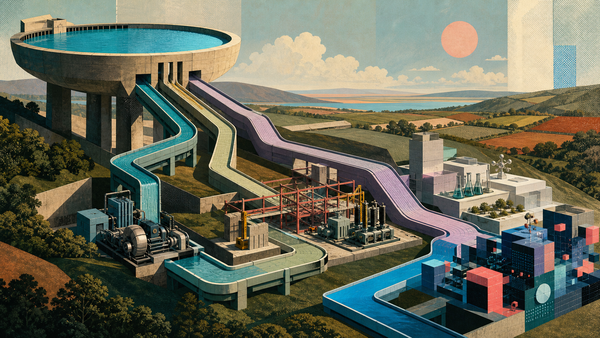
A BDC dividend begins somewhere less visible: a machine shop expanding, a software company refinancing, a healthcare business changing owners, or a sponsor funding an acquisition.

Treasury moved to support long-end market liquidity, but the BDC lesson is not that rates are falling. Funding costs and borrower pressure still matter.
FSK’s Q2 repair actions are beginning to show up in credit and leverage. The harder question is whether a shrinking portfolio can still support a durable dividend recovery.
OBDC’s earnings improved in Q2, but the deeper story is a shrinking portfolio, selective deployment and a credit book still working through problem names.

The BDC income engine is still working. The harder question is whether lenders can replace repayments, protect NAV, and capture new financing demand without weakening underwriting.

HTGC produced strong income, rising NAV and low non-accruals, but record early repayments exposed the tension between venture-credit demand and portfolio retention.

MAIN's final Q2 results paired another NAV increase with strong regular-dividend coverage, but NII did not cover the combined regular and supplemental payout.
ARCC covered the dividend in Q2, but the quarter's more important signal was weaker asset-value and credit quality beneath stable core earnings.

AI used to reach private credit through software borrowers. Now it arrives as a gigawatt-scale infrastructure project with billions of dollars of debt.
PFLT's dividend reset repaired the forward payout math. NAV erosion, rising unrealized depreciation and portfolio runoff still make the credit work essential.

The Fed did not give markets a path. It gave them a fork. For BDC investors, the old higher-for-longer trade is splitting into two stories: income and credit.